
Credentials and Certifications
By Risk Data Analytics, Inc. Article 009
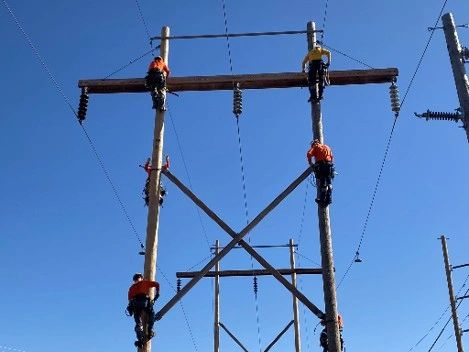
In the high-stakes environment of electrical line work, where professionals routinely operate at heights of 50 feet or more and handle voltages that can exceed 500,000 volts, credential management is far more than just administrative paperwork. For an electrical lineman, your credentials are your license to climb. Proper tracking, renewal, and verification of certifications are essential components of safety, acting as a frontline defense against catastrophic accidents, regulatory fines, and career-ending oversights. It ensures that every lineman on a crew is legally, technically, and physically qualified to perform the job at hand.
Linemen are part of the skilled workforce requiring specialized certificates and credentials to perform their jobs safely. Effective management of these documents ensures compliance with industry standards and maintains workforce competency, protecting both the worker and the public.
Safety Through Verified Competence
Certifications are not just pieces of paper; they verify that a worker has the requisite knowledge, skills, and ongoing training needed to handle complex responsibilities. A single lapse in qualification can turn a routine operation, such as a pole-top rescue, into a fatality.
To maintain verified competence, regulatory bodies require specific training:
If a lineman's rescue certification expires mid-project, the entire crew may be barred from energized work until compliance is restored.
Real-World Example 1: The Cost of Lapsed Safety Training In 2022, a Midwest utility was hit with a $127,000 OSHA citation after auditors discovered three journeymen working on a 69 kV line had expired arc flash training (NFPA 70E). They had completed the course 26 months prior, missing the 24-month renewal window by just two months. This incident highlights how a small oversight can lead to massive fines and serious safety exposure.
Regulatory Mandates and Financial Protection
Beyond safety, rigorous credential tracking is critical for regulatory adherence and financial stability. Utilities and contractors bidding on federal or municipal contracts are required to submit credential matrices to prove 100% compliance. Additionally, the North American Electric Reliability Corporation (NERC) mandates that personnel working on Bulk Electric System (BES) assets hold the NERC System Operator certification with documented continuing education hours.
A single undocumented lineman can void coverage for an entire incident, as insurance carriers routinely audit these records. Neglect can lead to significant financial consequences, including OSHA fines up to $15,625 per violation (at 2025 rates), project delays costing over $50,000 per day in large outages, and workers' comp claim denials if the injured worker lacked required training.

Real-World Example 2: Operational Compliance Failure In 2024, a Texas contractor lost a massive $4.2 million storm-restoration contract because the requesting utility discovered that 12% of the proposed crew lacked current CDL Class A endorsements. This credential was required for operating digger derricks that weigh over 26,001 lbs GVWR.
A Roadmap for Career Advancement
Credential management isn't just about avoiding penalties; it serves as a roadmap for advancement within the trade. For apprentices, progress is tracked through documented steps, such as 4,000-hour milestones. Journeymen often pursue credentials like Certified Journeyman Lineman (CJLM) status or Substation Technician certifications.
Digital credential wallets, such CertLok, allow for credential verification during the hiring process or during crucial mutual aid deployments.
Real-World Example 3: Speeding Up Storm Recovery During Hurricane Ian recovery efforts in 2022, Florida Power & Light efficiently onboarded 1,200 mutual aid linemen in less than 48 hours using QR-coded credential badges. Conversely, crews without scannable, up-to-date credentials were sidelined, causing delays in restoration efforts in hard-hit areas.
Best Practices for Linemen and Supervisors
To prevent costly and dangerous lapses, linemen and supervisors should implement robust management practices:
Treat your credentials with the same rigor you apply to grounding procedures or insulated tool inspections. A robust credential management system ensures that when the storm hits or the arc flash hazard looms, the only thing between you and disaster is your excellent training, not an expired certification. certlok credential management