Safety Information
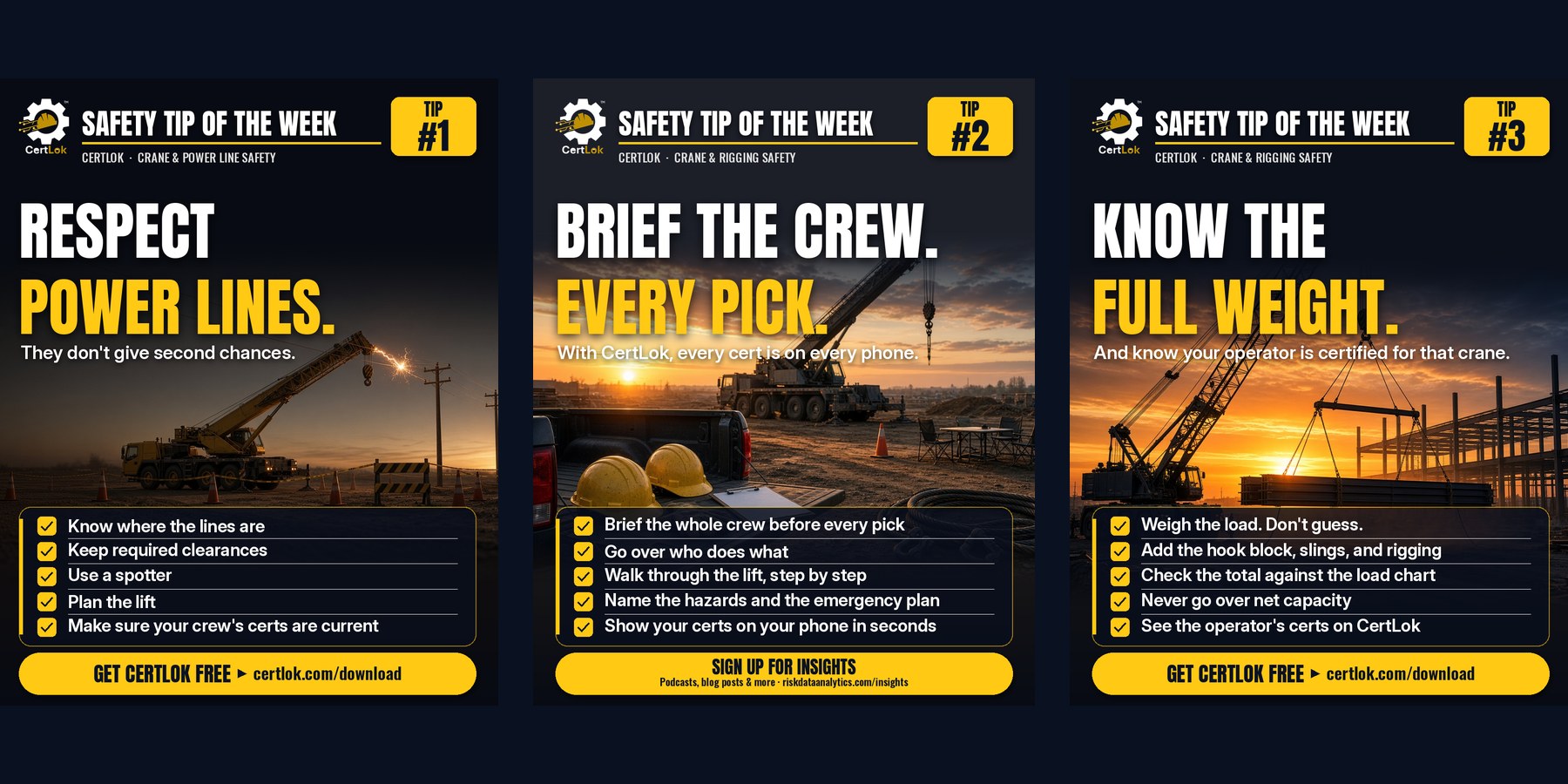
Twenty safety tips for crane operators, riggers, and signalpersons, in order, from the CertLok Safety Tip series. Each tip has a short checklist, a bottom line, and the source behind it. Share them with your crew.
Terms used on this page: OSHA means Occupational Safety and Health Administration; CFR means Code of Federal Regulations; CPWR means the Center for Construction Research and Training; mph means miles per hour; CCO means Certified Crane Operator; CDL means commercial driver's license.
General safety information only. Always follow your employer's safety program and the official OSHA standards.
Keep your safety certifications in one digital wallet on your phone, ready to share in seconds.
Download CertLok freeSign up for Insights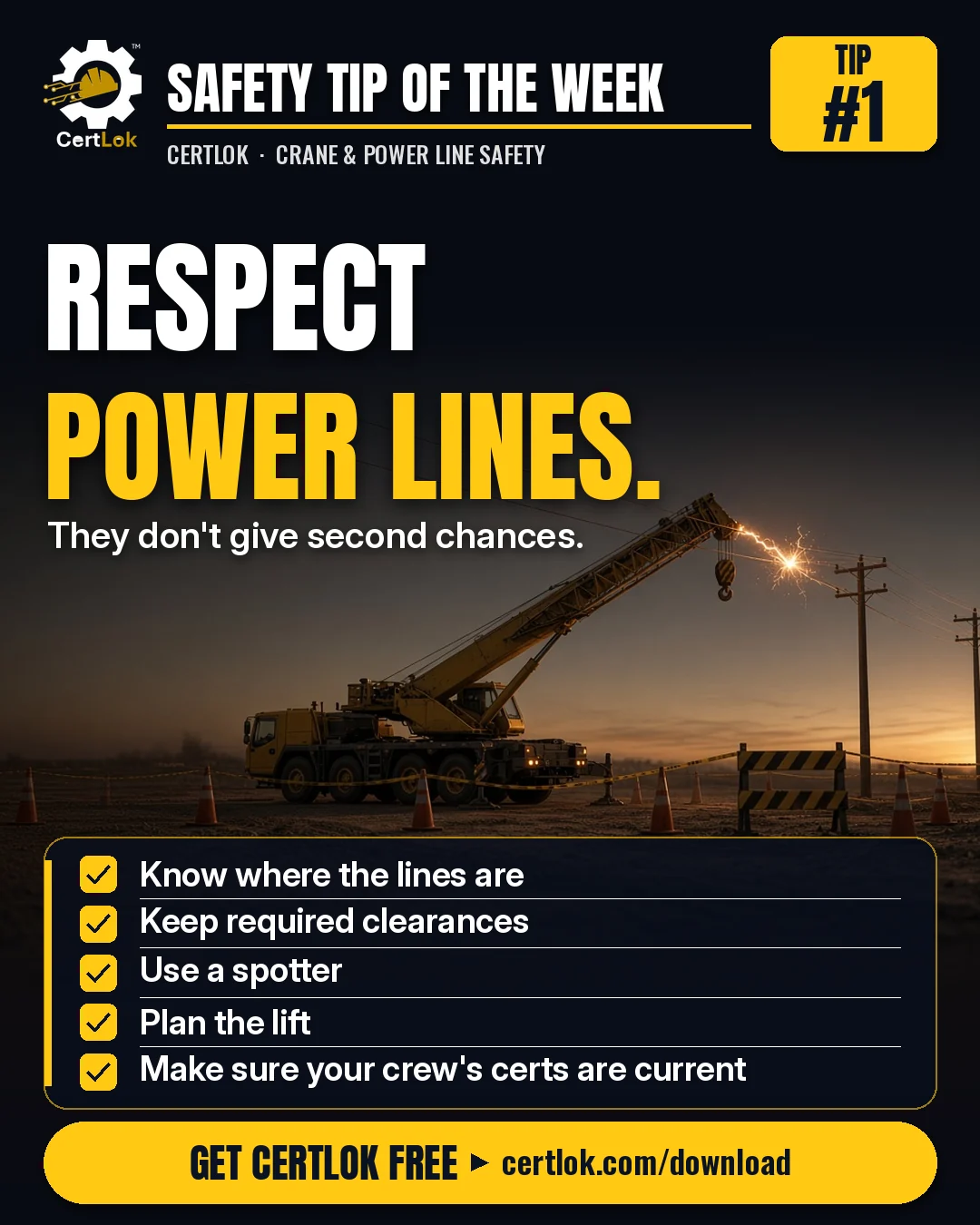
Respect power lines. They don't give second chances.
According to the Center for Construction Research and Training (CPWR), 157 construction workers died from crane contact with overhead power lines between 1992 and 2006. That was 1 in 4 of all crane-related deaths in that time. More than half of them were on the ground, touching or guiding the load.
Before the lift:
Bottom line: power line safety starts when the job is planned.
Crane operators, linemen, riggers, groundmen, and more all count on that plan. So plan the lift, and make sure your crew's certifications are current and in one place.
Your pre-lift meeting starts with one question: is everyone here qualified for this pick? With CertLok, every certification is already on every phone. Crane operators, riggers, and signalpersons can show their certs in seconds. No digging through trucks. No texting photo copies.
Then you can spend the meeting on what matters: the lift.
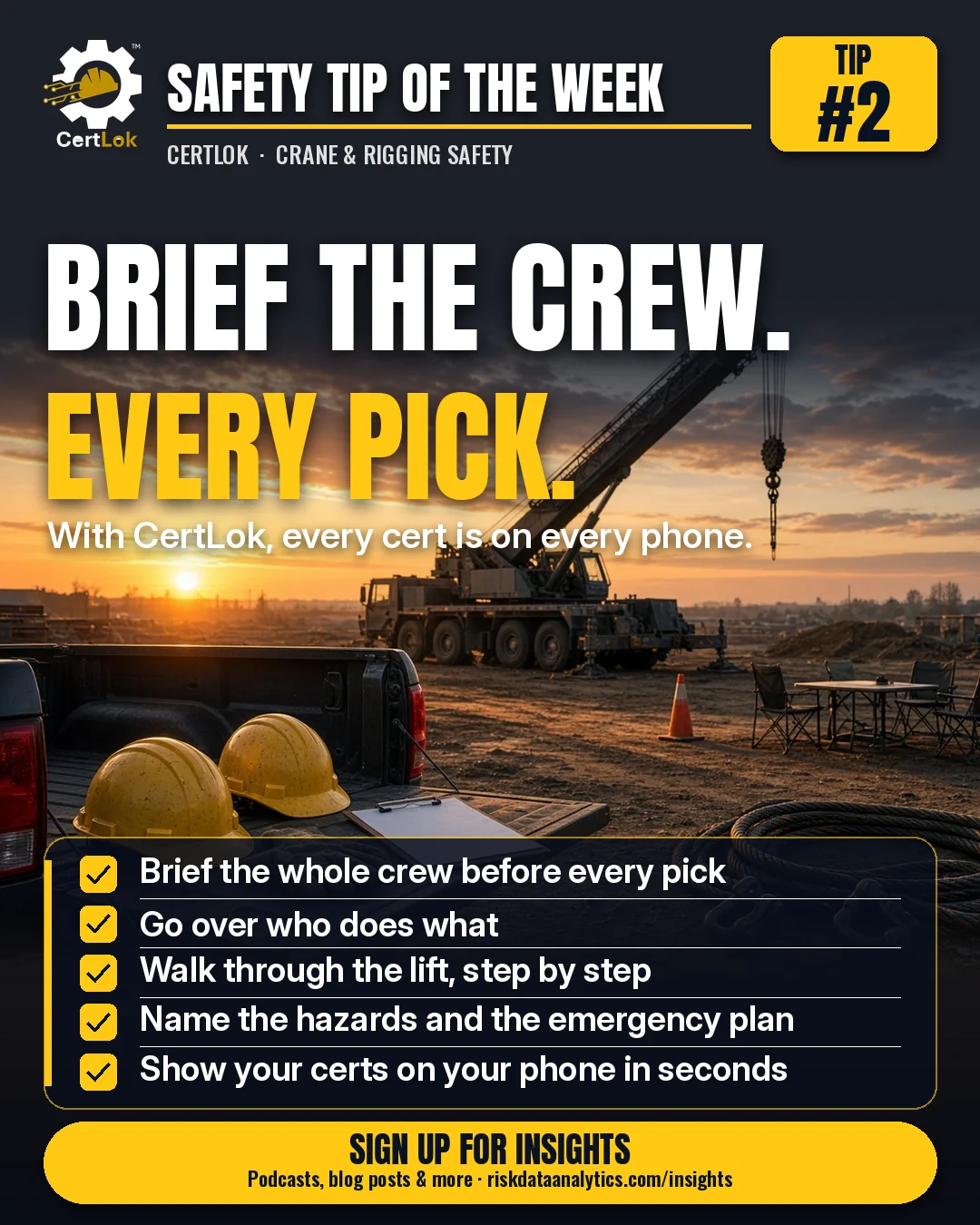
According to the Center for Construction Research and Training (CPWR), 132 construction workers were killed by a crane load from 1992 to 2006. About 1 in 3 of them were not even part of the crane work.
Before every pick:
Bottom line: a five-minute talk can save a life.
Crane operators, riggers, groundmen, and more all count on that talk. So brief the crew every pick, and keep your certifications current and in one place with CertLok.
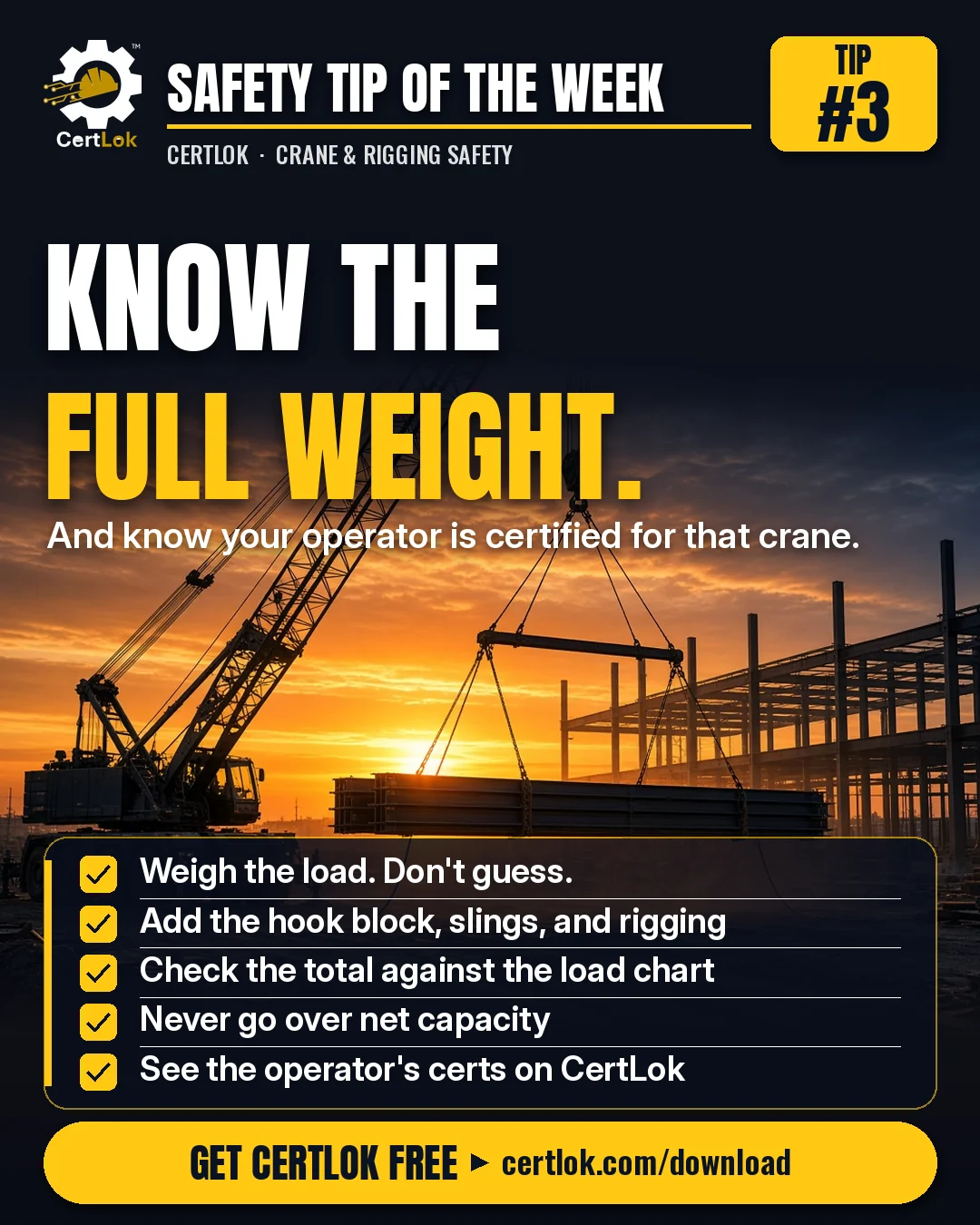
Before the pick, two things have to be right: the weight, and the person in the seat. CertLok handles the second one. Your crane operator can show, on their phone and in seconds, that they're certified for that crane. We verify credentials like your CCO card and CDL.
Now get the weight right.
According to the Center for Construction Research and Training (CPWR), crane collapses killed 89 construction workers from 1992 to 2006. Overloading the crane caused 10 of those deaths.
Before every pick:
Bottom line: count every pound, every pick.
Crane operators, riggers, groundmen, and more all count on those numbers. So check the weight, and keep your certifications current and in one place with CertLok.
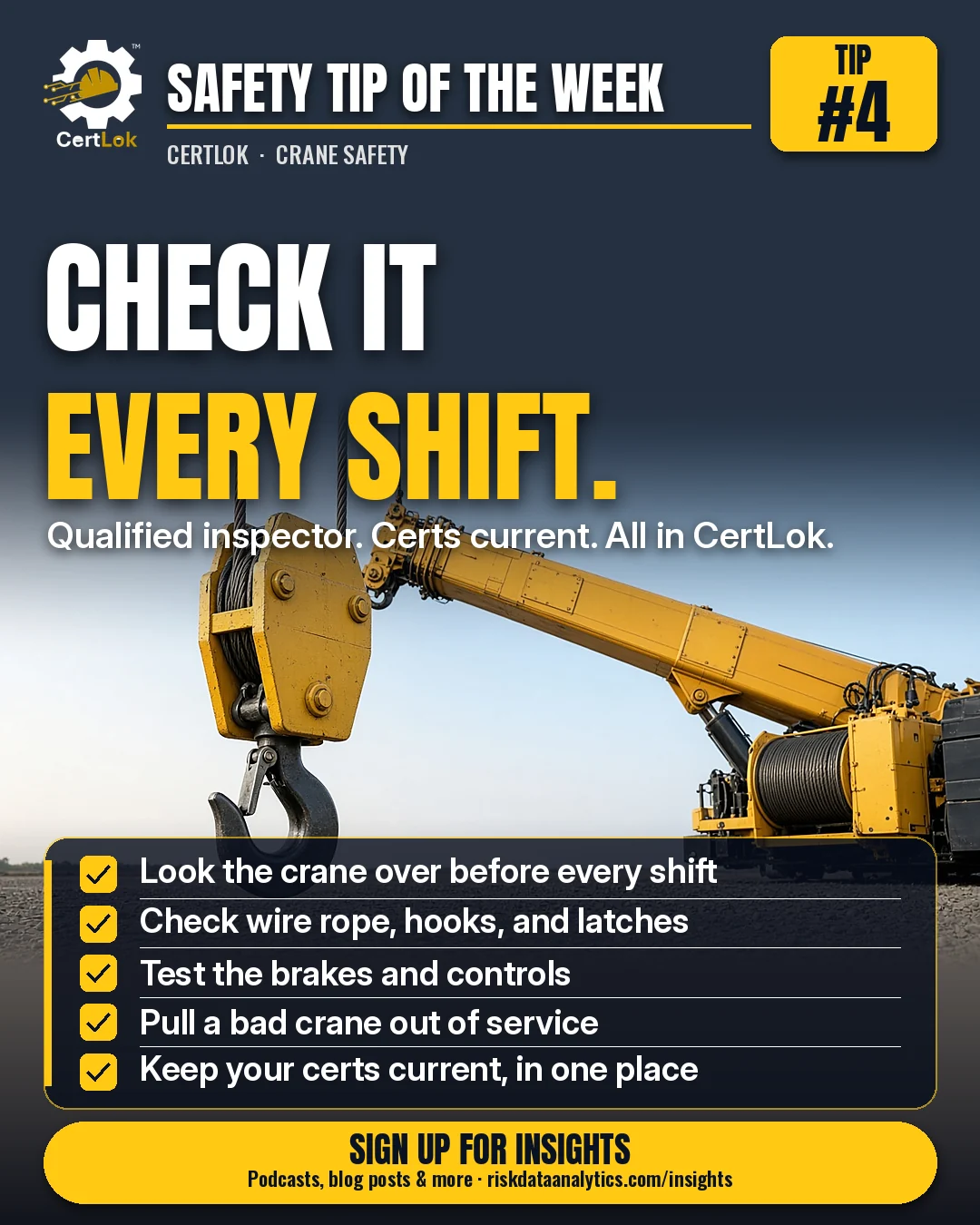
Every shift, someone has to look the crane over before it works. Make sure that person is qualified. With CertLok, their certifications are current, in one place, and on their phone, ready to show in seconds.
According to the Occupational Safety and Health Administration (OSHA), a competent person must start a visual check of the crane before every shift it will be used. If they find a safety hazard, the crane comes out of service until it's fixed.
Every shift:
Bottom line: small problems are cheap to find before the first pick.
Crane operators, riggers, heavy equipment operators, and more all count on that check. So check it every shift, and keep your certifications current and in one place with CertLok.
Source: OSHA, 29 CFR 1926.1412(d), "Inspections: Each shift."
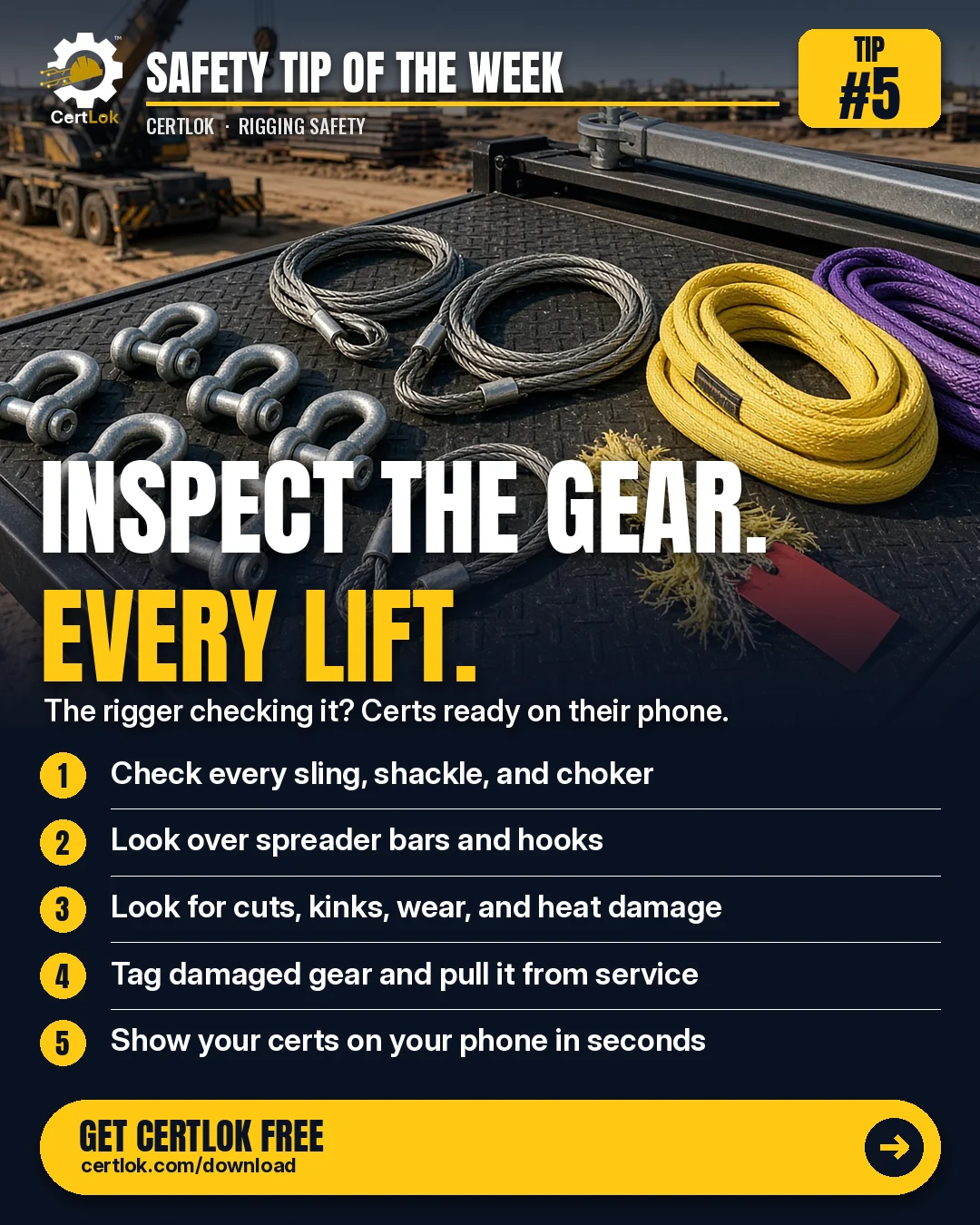
The rigger inspecting your gear should be qualified, and able to prove it. With CertLok, their certifications are already on their phone, ready to show in seconds. No digging through trucks. No texting photo copies.
Then the crew can focus on the gear itself.
According to the Center for Construction Research and Training (CPWR), 132 construction workers were killed by a crane load from 1992 to 2006. In 8% of those deaths, straps, buckles, safety latches, or sling clips failed or broke.
Before every use:
Bottom line: bad gear doesn't get a second lift.
Crane operators, riggers, groundmen, and more all count on that check. So inspect the gear every time, and keep your certifications current and in one place with CertLok.
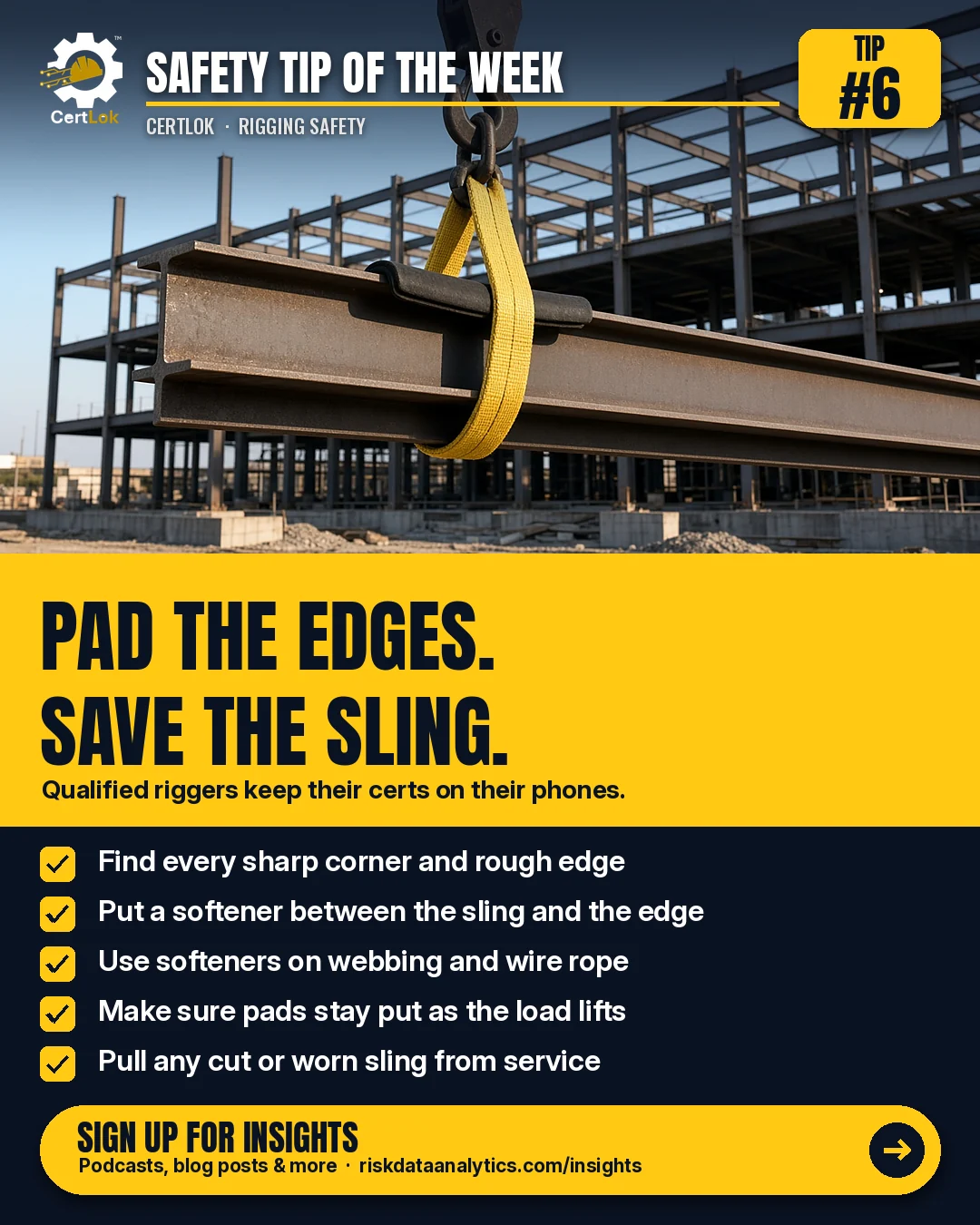
Good rigging starts with a qualified rigger. With CertLok, riggers keep their certifications in one digital wallet on their phone and share them in seconds. No texting photo copies. No "I'll bring it tomorrow."
Then the crew can focus on the edges that cut slings.
According to the Center for Construction Research and Training (CPWR), 132 construction workers were killed by a crane load from 1992 to 2006. In 14% of those deaths, a rigging cable or strap broke.
Before every lift:
Bottom line: a sharp edge under tension can cut a sling in seconds.
Crane operators, riggers, groundmen, and more all count on that sling. So pad the edges every lift, and keep your certifications current and in one place with CertLok.
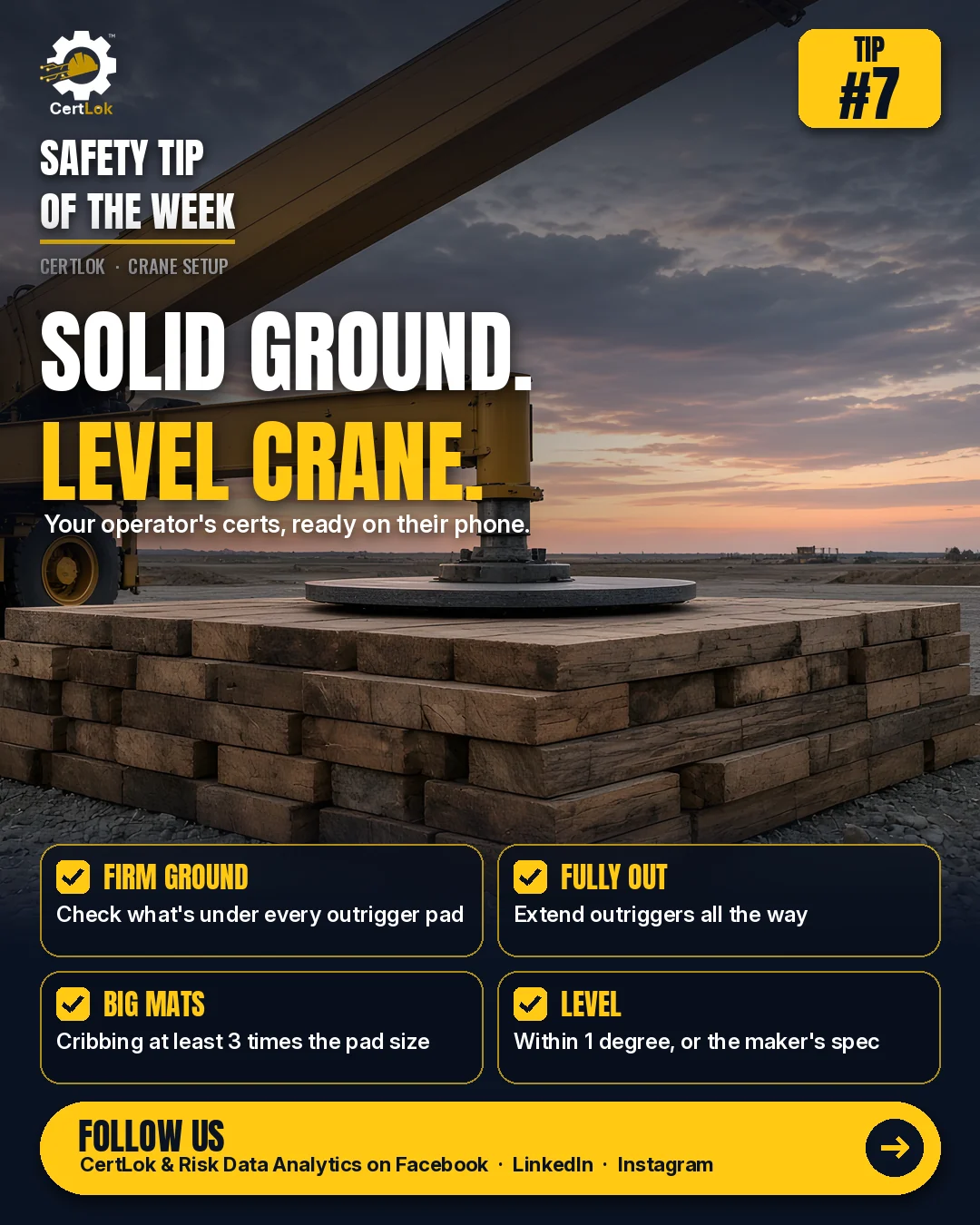
Before the outriggers go down, the site wants to see the operator's certifications. With CertLok, they're on the operator's phone, ready to show in seconds. We verify credentials like your CCO card and CDL.
Then the crew can focus on what's under the crane.
According to the Center for Construction Research and Training (CPWR), crane collapses killed 89 construction workers from 1992 to 2006. An unstable, uneven, or icy surface under the crane caused 12 of those deaths.
Before every setup:
Bottom line: a crane is only as steady as the ground under it.
Crane operators, riggers, groundmen, heavy equipment operators, and more all count on a solid setup. So check the ground every time, and keep your certifications current and in one place with CertLok.
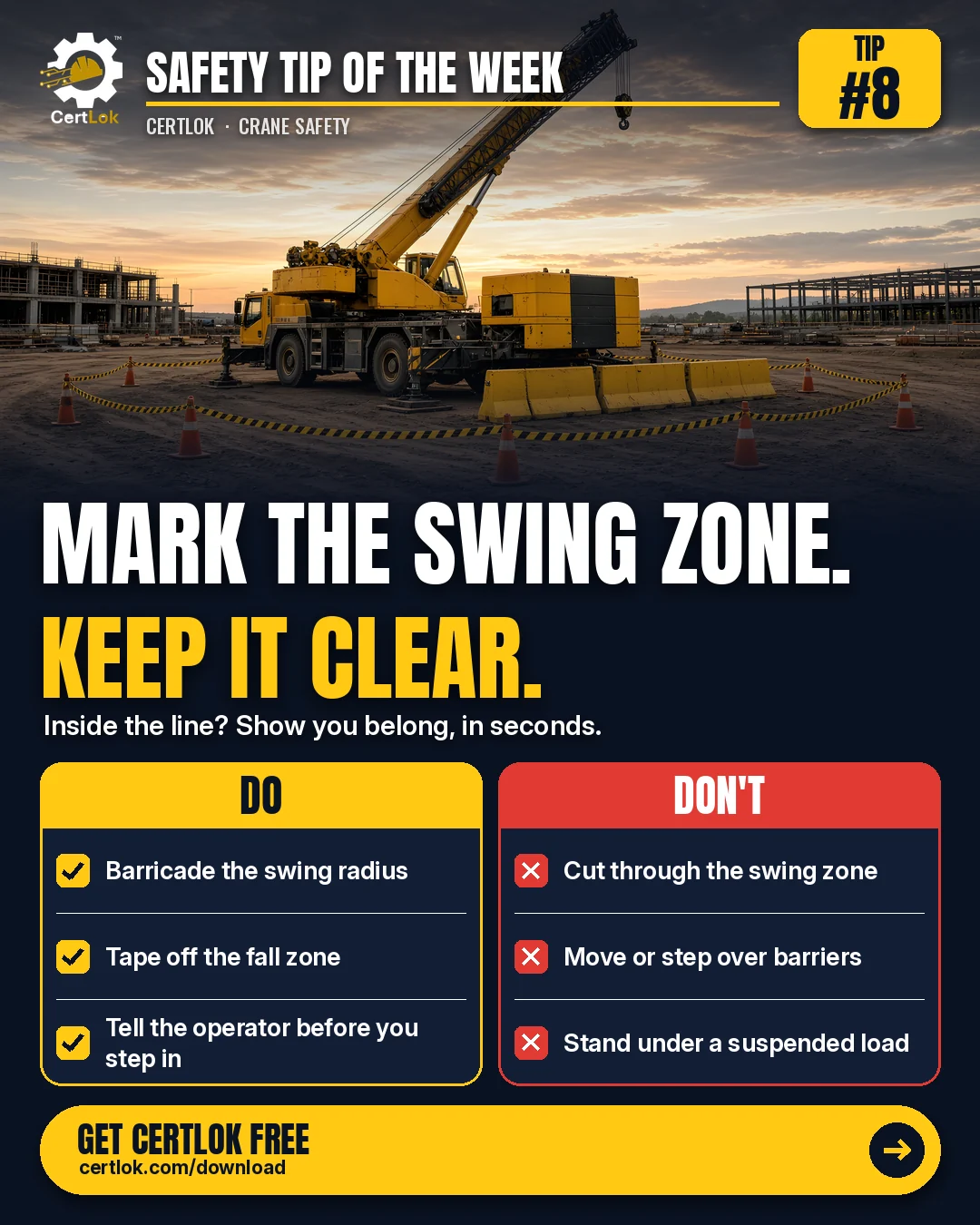
The crew working inside the barricade should be able to show they belong. With CertLok, every certification is on their phone, ready to show in seconds. No digging through trucks. No texting photo copies.
Then everyone else stays outside the line.
According to the Center for Construction Research and Training (CPWR), 30 construction workers died from 1992 to 2006 after being caught in or between crane parts. Rules from the Occupational Safety and Health Administration (OSHA) require barriers that mark the area the crane's turning upper works can swing into.
DO:
DON'T:
Bottom line: if you're inside the line, the operator needs to know.
Crane operators, riggers, groundmen, and more all count on a clear zone. So mark it every lift, and keep your certifications current and in one place with CertLok.
Sources: CPWR, "Crane-Related Deaths in Construction and Recommendations for Their Prevention" (revised Nov 2009), "Causes of death" and Table 1; OSHA, 29 CFR 1926.1424(a)(2)(ii), "Work area control: Swing radius hazards."
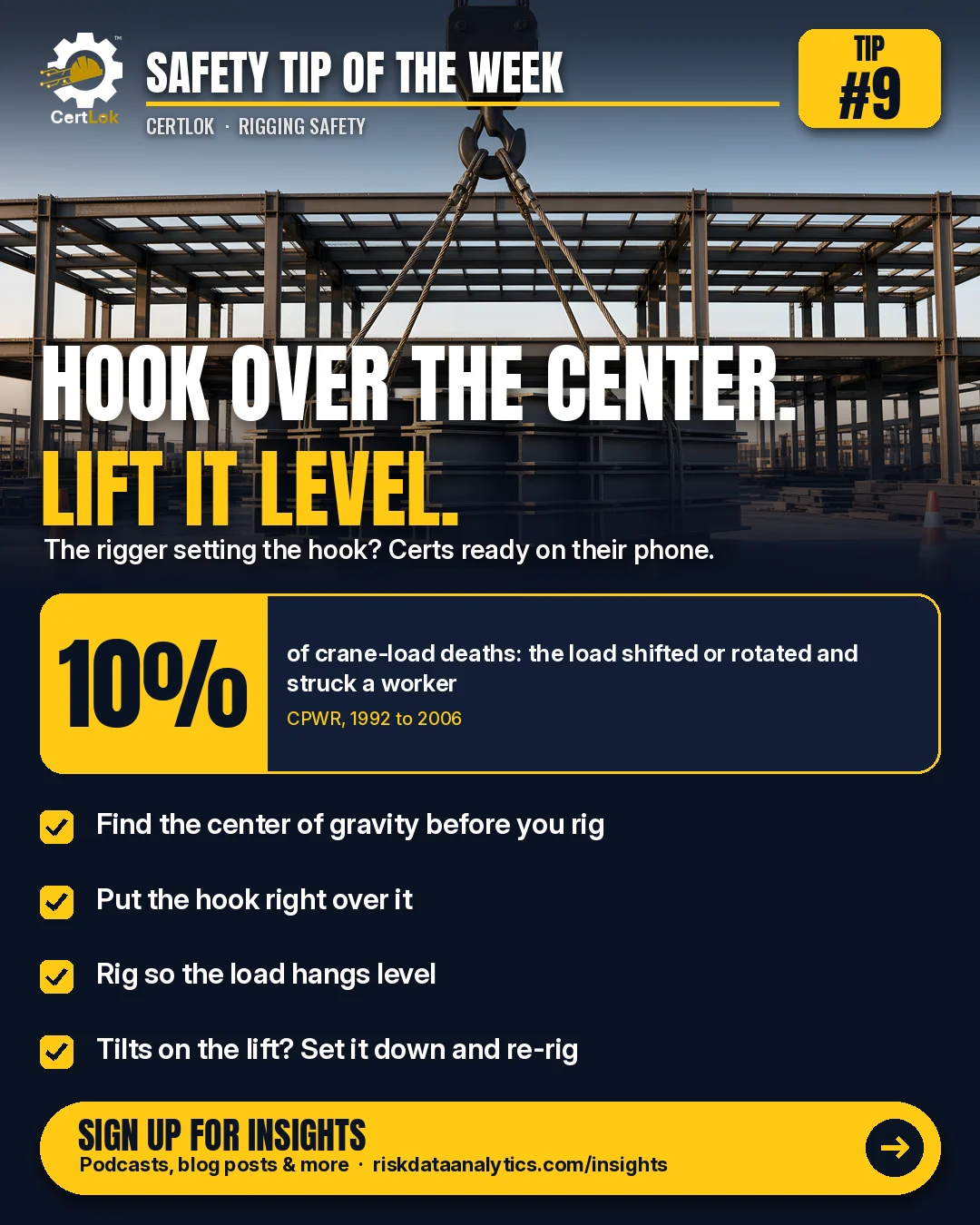
Rigging starts with a rigger who knows how, and can prove it. With CertLok, riggers keep their certifications in one digital wallet on their phone and share them in seconds. No texting photo copies. No "I'll bring it tomorrow."
Then the crew can focus on where the hook goes.
According to the Center for Construction Research and Training (CPWR), 132 construction workers were killed by a crane load from 1992 to 2006. In 10% of those deaths, the load shifted or rotated and struck a worker.
Before every lift:
Bottom line: a hook off center means a load that tilts, swings, or slides.
Crane operators, riggers, groundmen, and more all count on a level load. So find the center every time, and keep your certifications current and in one place with CertLok.
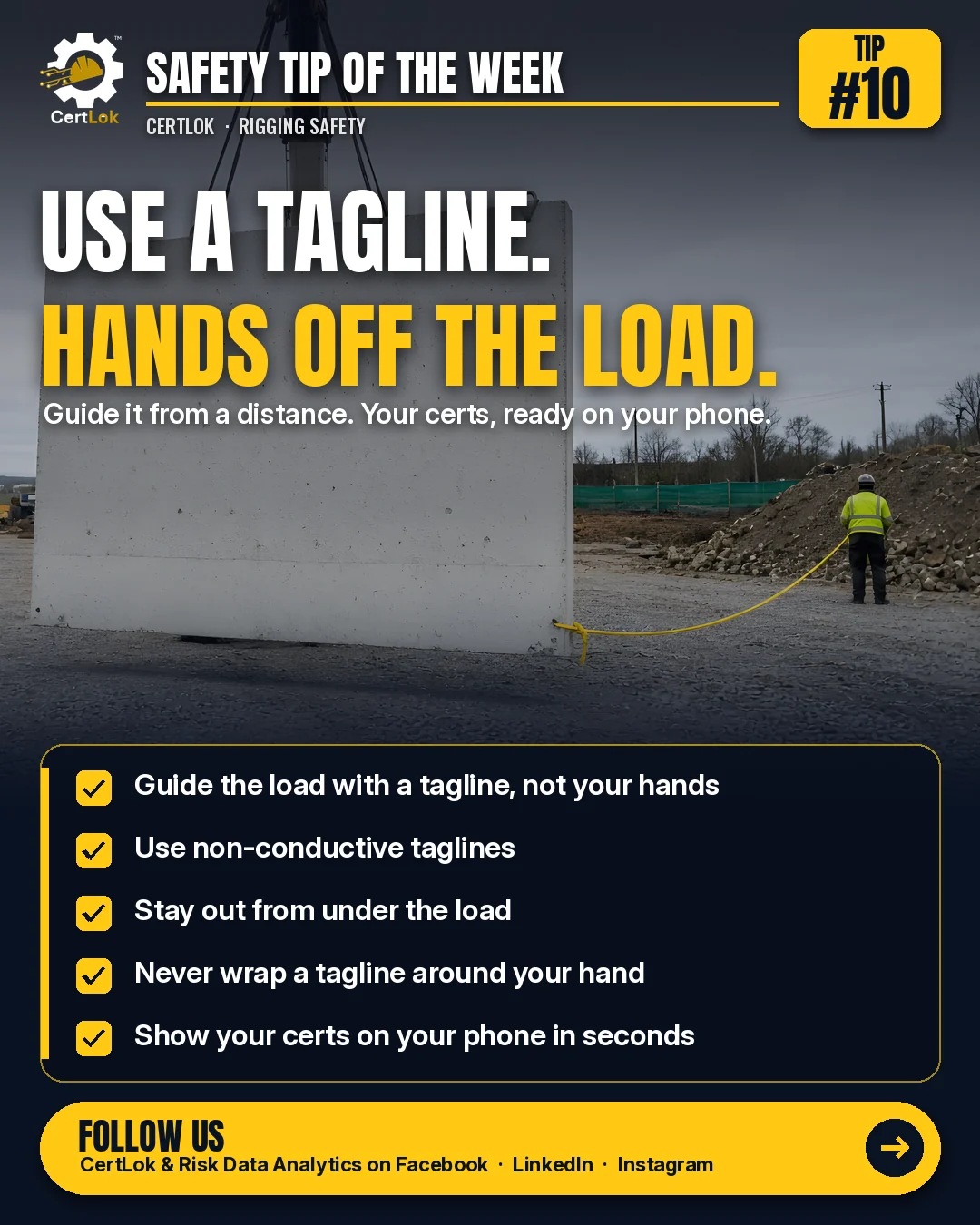
The crew guiding a load should be trained, and able to show it. With CertLok, their certifications are on their phone, ready to share in seconds. No digging through trucks. No texting photo copies.
Then the crew can focus on keeping hands off the load.
According to the Center for Construction Research and Training (CPWR), 132 construction workers were killed by a crane load from 1992 to 2006. 14% of those deaths happened while the worker was flagging, directing, or guiding the load. And when a crane works close to power lines, rules from the Occupational Safety and Health Administration (OSHA) say any tag lines must be non-conductive.
Every lift:
Bottom line: let the rope do the work. Keep your hands off a suspended load.
Crane operators, linemen, riggers, groundmen, and more all count on that distance. So use a tagline every time, and keep your certifications current and in one place with CertLok.
Sources: CPWR, "Crane-Related Deaths in Construction and Recommendations for Their Prevention" (revised Nov 2009), "Details of causes," page 4; OSHA, 29 CFR 1926.1408(b)(2), power line safety
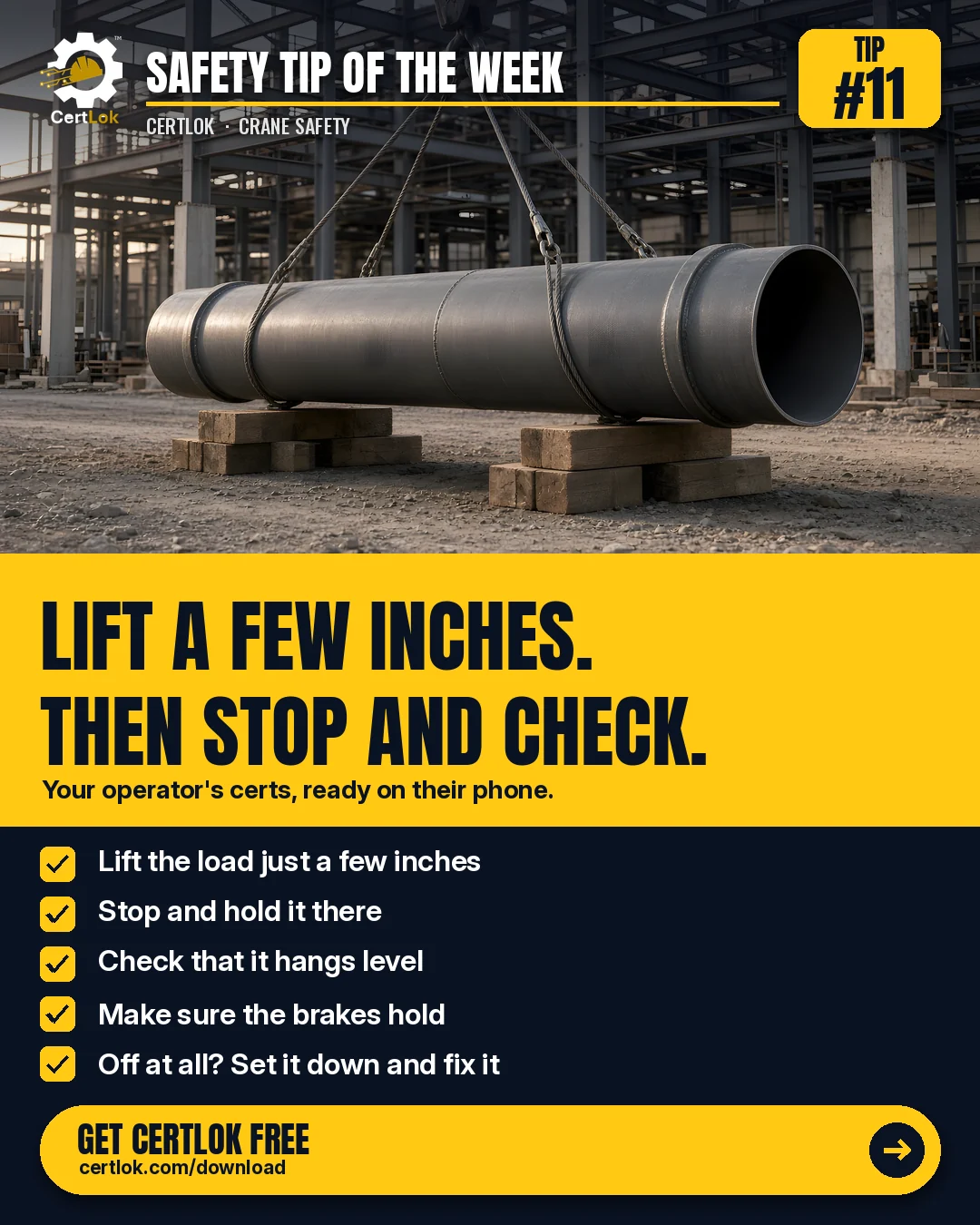
A good trial lift starts with an operator who's qualified, and can prove it. With CertLok, the operator's certifications are on their phone, ready to show in seconds. We verify credentials like your CCO card and CDL.
Then the crew can focus on those first few inches.
According to the Center for Construction Research and Training (CPWR), 132 construction workers were killed by a crane load from 1992 to 2006. In 19% of those deaths, the load came loose from the rigging. Rules from the Occupational Safety and Health Administration (OSHA) also say that when a load is 90% or more of the crane's maximum line pull, the operator must test the brakes by lifting the load a few inches and applying them.
Before every lift:
Bottom line: a few inches up is the place to find a problem, not fifty feet up.
Crane operators, riggers, groundmen, and more all count on that pause. So test every lift, and keep your certifications current and in one place with CertLok.
Sources: CPWR, "Crane-Related Deaths in Construction and Recommendations for Their Prevention" (revised Nov 2009), "Details of causes," page 4; OSHA, 29 CFR 1926.1417(s), operation
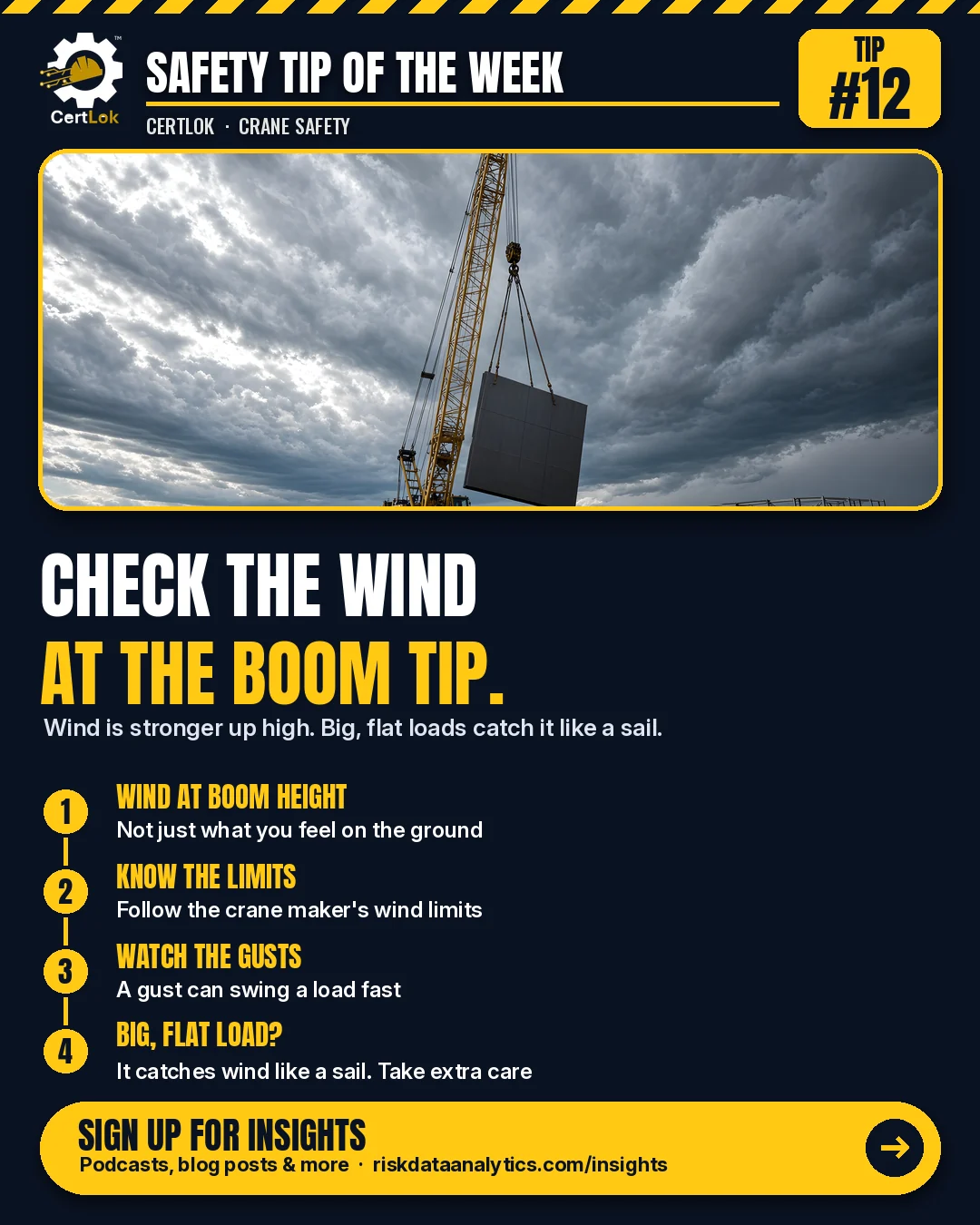
Windy days need an operator who's qualified, and able to prove it. With CertLok, operators keep their certifications in one digital wallet on their phone and share them in seconds. No texting photo copies.
Then the crew can focus on the wind up high.
According to the Center for Construction Research and Training (CPWR), a crane known as "Big Blue" collapsed at a stadium in Milwaukee in 1999 in winds of 25 to 30 mph, and three construction workers were killed. Rules from the Occupational Safety and Health Administration (OSHA) say the competent person must adjust the crane or the work for the effect of wind, ice, and snow on the crane's stability and capacity.
Before every lift:
Bottom line: the wind at the boom tip decides the lift, not the wind at your boots.
Crane operators, riggers, groundmen, and more all feel the wind. So check it up high every time, and keep your certifications current and in one place with CertLok.
Sources: CPWR, "Crane-Related Deaths in Construction and Recommendations for Their Prevention" (revised Nov 2009), Table 5, "Selected Fatal Crane Incidents Involving Bystanders" (citing LaBar, Occupational Hazards, July 1999); OSHA, 29 CFR 1926.1417(n), operation
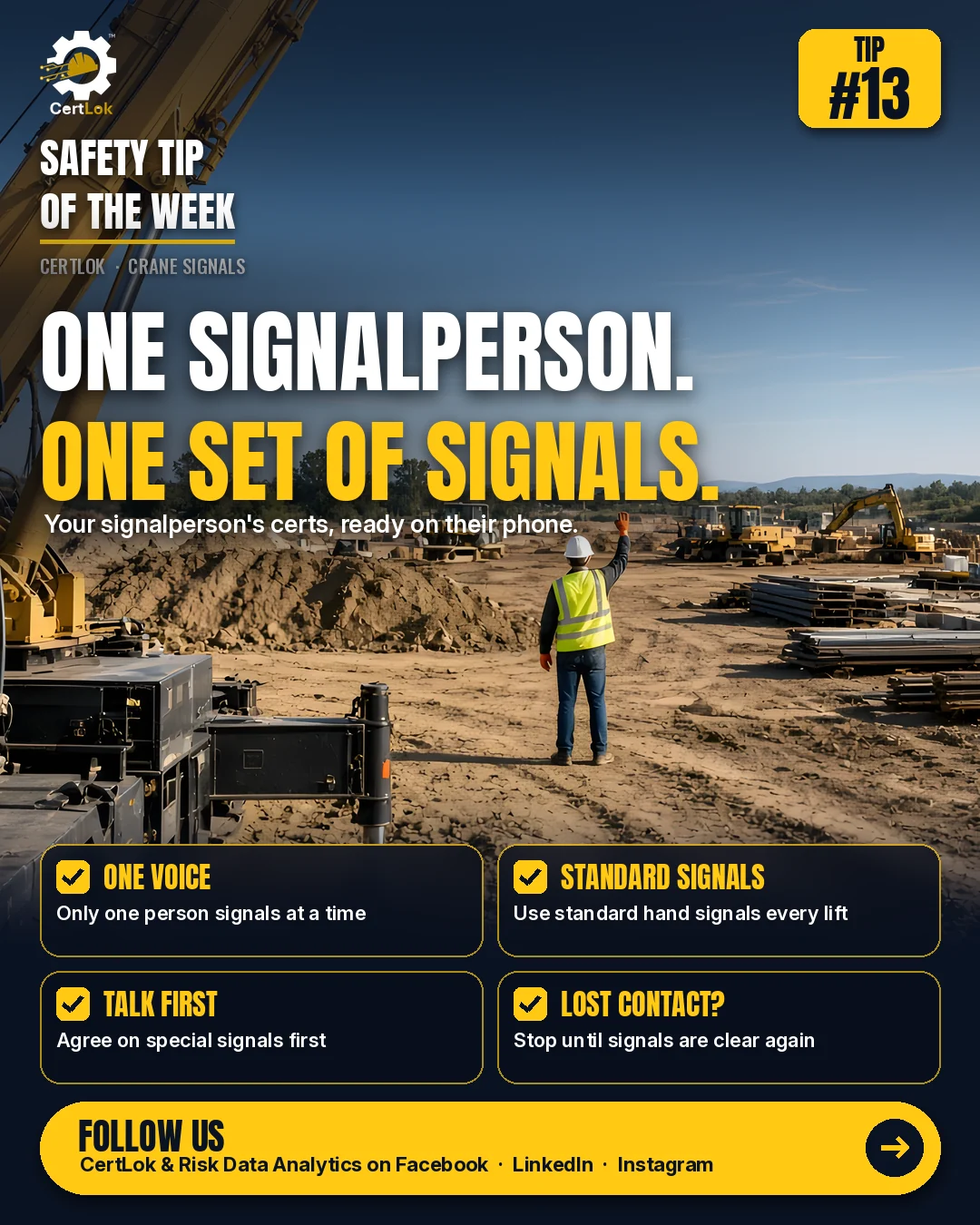
The person giving signals should be qualified, and able to show it. With CertLok, signalpersons keep their certifications in one digital wallet on their phone and share them in seconds. No digging through trucks.
Then the crew can focus on one clear voice.
According to the Occupational Safety and Health Administration (OSHA), only one person may give signals to a crane at a time, and hand signals must follow the Standard Method. If the signals are interrupted, the operator must safely stop until they're back and understood. (Anyone can still call a stop. More on that in a later tip.)
Every lift:
Bottom line: mixed signals drop loads.
Crane operators, riggers, groundmen, and more all count on clear signals. So keep it to one voice, and keep your certifications current and in one place with CertLok.
Source: OSHA, 29 CFR 1926.1419(c)(1), (c)(2), (f), and (h), signals
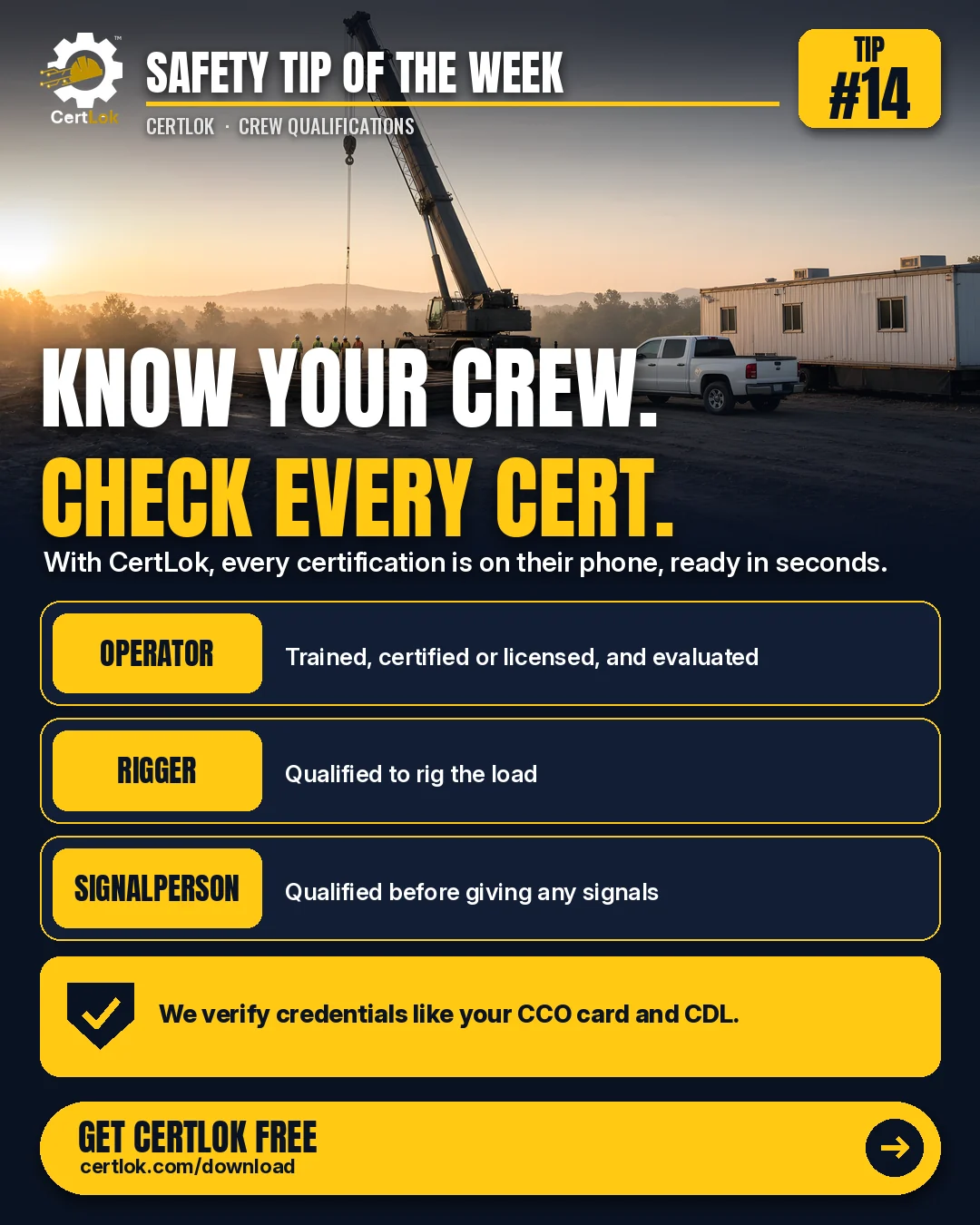
Before the first lift, the site needs to know the crew is qualified. With CertLok, crane operators, riggers, and signalpersons keep their certifications in one digital wallet on their phone and share them in seconds, instead of texting photo copies. CertLok also keeps your Work History in one place. We verify credentials like your CCO card and CDL.
Then the crew can focus on the lift itself.
According to the Occupational Safety and Health Administration (OSHA), every crane operator must be trained, certified or licensed, and evaluated before running a crane. Signalpersons must be qualified before they give any signals. And when workers are hooking, unhooking, or guiding a load in the fall zone, the load must be rigged by a qualified rigger.
Before every job:
Bottom line: a qualified crew is the first safety device on any lift.
Crane operators, linemen, riggers, groundmen, welders, plumbers, pipefitters, shipbuilders, heavy equipment operators, and more all carry certifications that matter. Keep yours current and in one place with CertLok.
Sources: OSHA, 29 CFR 1926.1427(a), operator training, certification, and evaluation; OSHA, 29 CFR 1926.1428(a), signal person qualifications. A rule; OSHA, 29 CFR 1926.1425(c)(3), keeping clear of the load. A rule
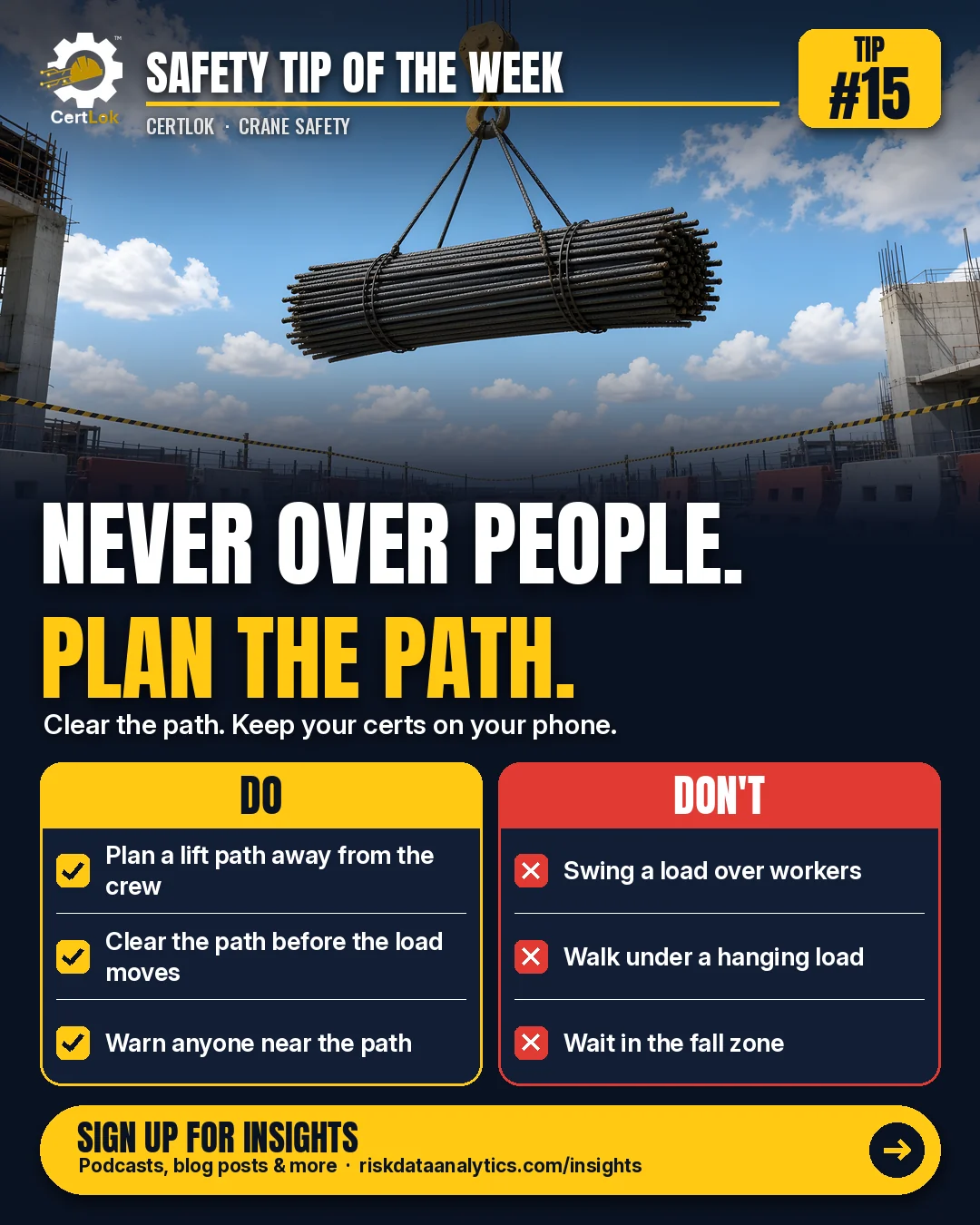
Everyone on the ground counts on a qualified operator and rigger. With CertLok, they keep their certifications in one digital wallet on their phone and share them in seconds. No texting photo copies.
Then the crew can focus on the path the load takes.
According to the Occupational Safety and Health Administration (OSHA), crews must use lift paths that keep workers out from under hoisted loads where they can. When a load is hanging still, only a few workers, such as those hooking, unhooking, or guiding it, may be in the fall zone.
Every lift:
Bottom line: if a load could fall on someone, change the path.
Crane operators, linemen, riggers, groundmen, welders, pipefitters, and more all work near hoisted loads. So plan the path every time, and keep your certifications current and in one place with CertLok.
Source: OSHA, 29 CFR 1926.1425(a) and (b), keeping clear of the load
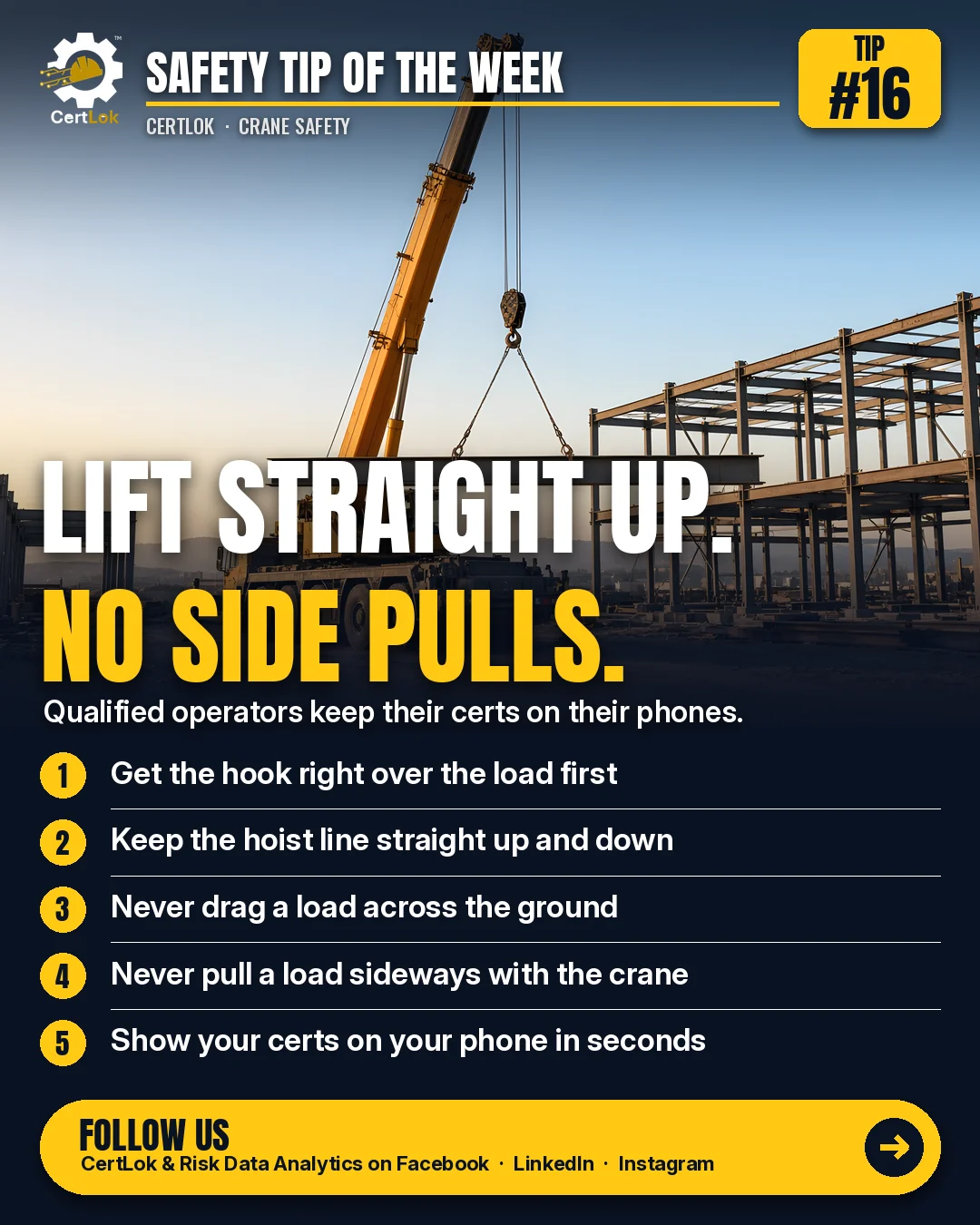
Straight, clean lifts take a qualified operator. With CertLok, operators keep their certifications in one digital wallet on their phone and share them in seconds. No texting photo copies.
Then the crew can focus on keeping the line straight.
According to the Center for Construction Research and Training (CPWR), 132 construction workers were killed by a crane load from 1992 to 2006. In 11% of those deaths, the crane turned, tilted, or lost control of the load and it struck a worker. Rules from the Occupational Safety and Health Administration (OSHA) say a crane must not be used to drag or pull loads sideways.
Every lift:
Bottom line: a crane is built to lift up, not to pull sideways.
Crane operators, riggers, groundmen, heavy equipment operators, and more all count on a straight lift. So keep the line plumb every time, and keep your certifications current and in one place with CertLok.
Sources: CPWR, "Crane-Related Deaths in Construction and Recommendations for Their Prevention" (revised Nov 2009), "Details of causes," page 4; OSHA, 29 CFR 1926.1417(q), operation
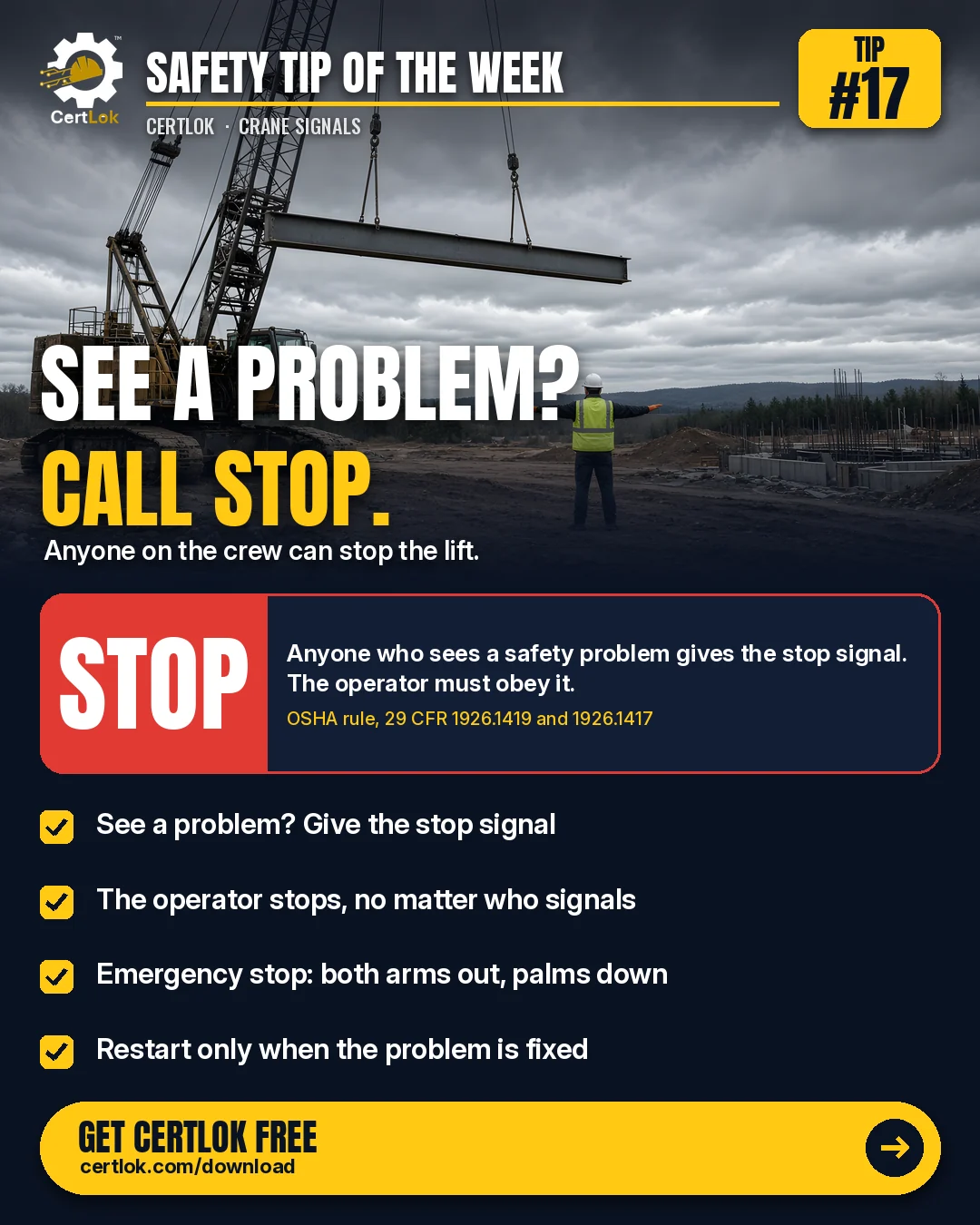
A safe crew is a qualified crew, and CertLok makes that easy to show. Your certifications live in one digital wallet on your phone, ready to share in seconds, along with your Work History.
Then the crew can focus on speaking up.
According to the Occupational Safety and Health Administration (OSHA), anyone who becomes aware of a safety problem must alert the operator or signalperson by giving the stop or emergency stop signal. The operator must obey a stop signal, no matter who gives it.
Every lift:
Bottom line: a stop signal is never the wrong call.
Crane operators, linemen, riggers, groundmen, heavy equipment operators, and more all have the right to stop the lift. So speak up every time, and keep your certifications current and in one place with CertLok.
Source: OSHA, 29 CFR 1926.1419(j) and 1926.1417(y)
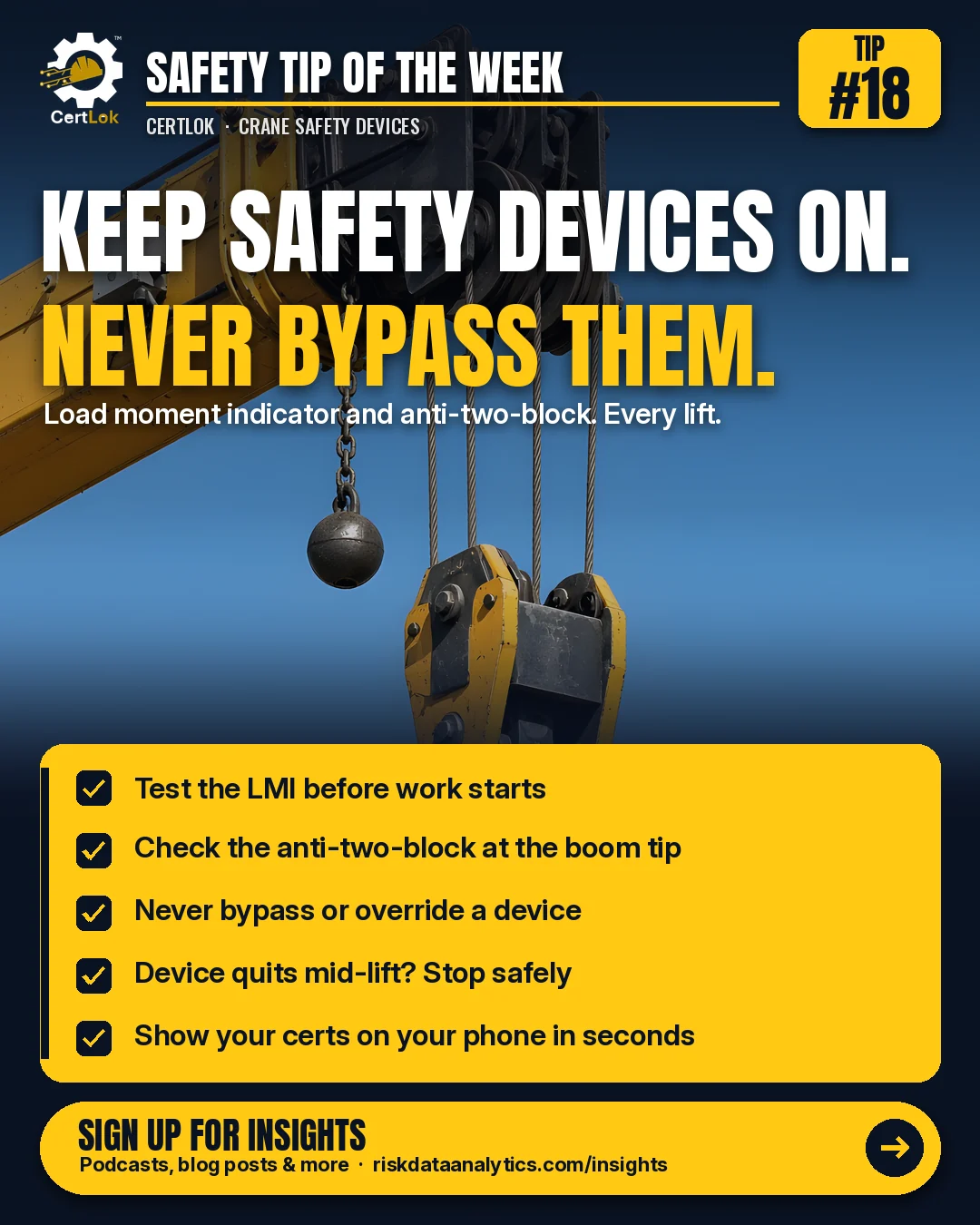
Safety devices back up a qualified operator. They don't replace one. With CertLok, operators keep their certifications in one digital wallet on their phone and share them in seconds.
Then the crew can focus on the devices that back them up.
According to the Occupational Safety and Health Administration (OSHA), a crane's required safety aids, like the anti-two-block device and the load moment indicator (LMI), must be working before the lift starts, unless approved backup steps are used while one is being repaired. If one stops working during the lift, the operator must safely stop. And the devices never replace the operator's own judgment.
Before every shift:
Bottom line: a safety device only works when it's switched on.
Crane operators, riggers, heavy equipment operators, and more all count on those devices. So keep them on every lift, and keep your certifications current and in one place with CertLok.
Source: OSHA, 29 CFR 1926.1416(b), (c), (d)(3), and (e)(4), operational aids; 1926.1417(k)
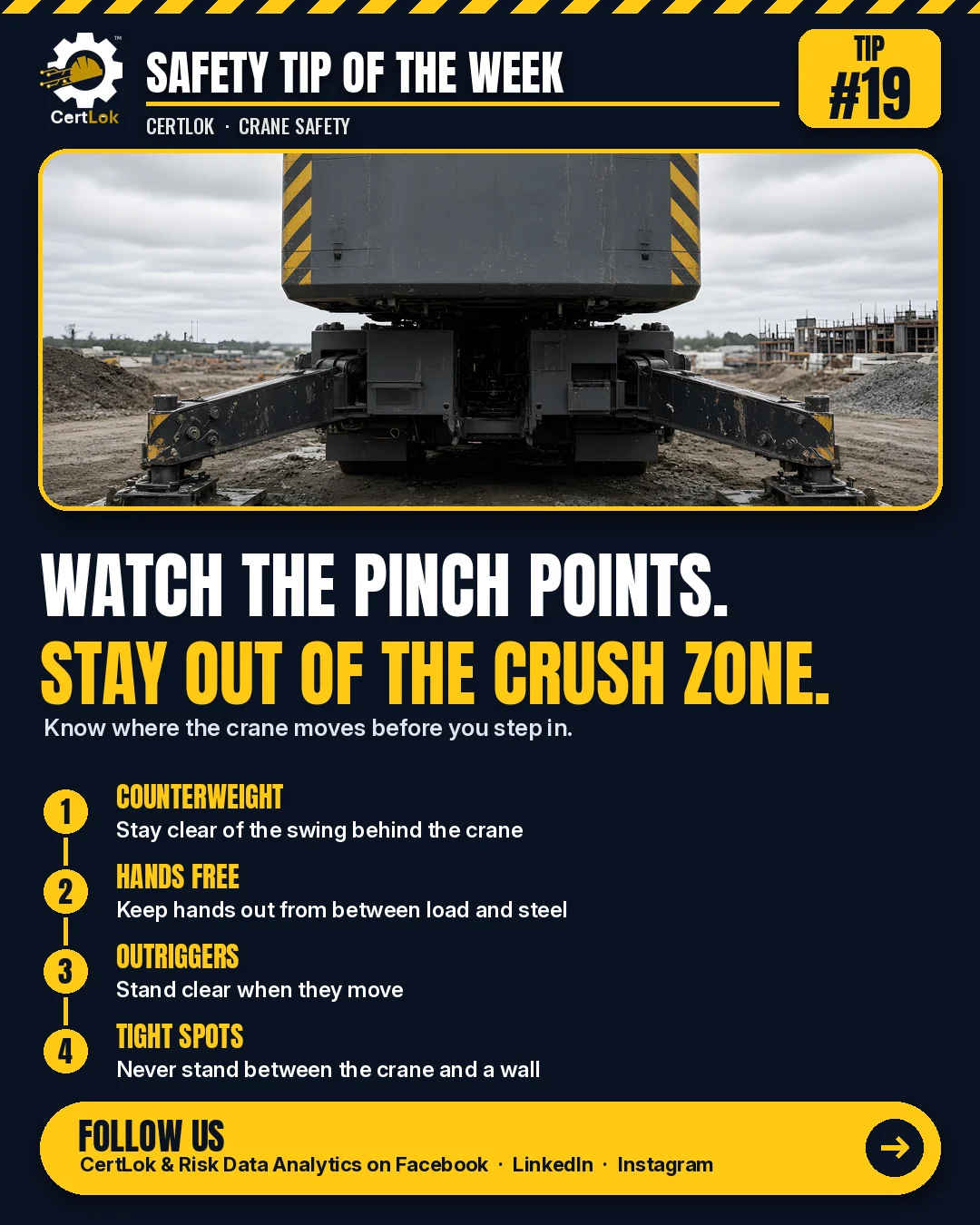
Working around a crane takes trained eyes. With CertLok, your certifications are on your phone, ready to share in seconds, and your Work History stays in one place. No texting photo copies.
Then the crew can focus on where the crane moves.
According to the Center for Construction Research and Training (CPWR), 125 construction workers were killed after being struck by a crane or crane parts from 1992 to 2006. That's 1 in 5 crane-related deaths, and it includes 13 workers run over by a mobile crane.
Every shift:
Bottom line: a crane can crush without ever lifting a thing.
Crane operators, riggers, groundmen, welders, heavy equipment operators, and more all work in that space. So know where the crane moves, and keep your certifications current and in one place with CertLok.
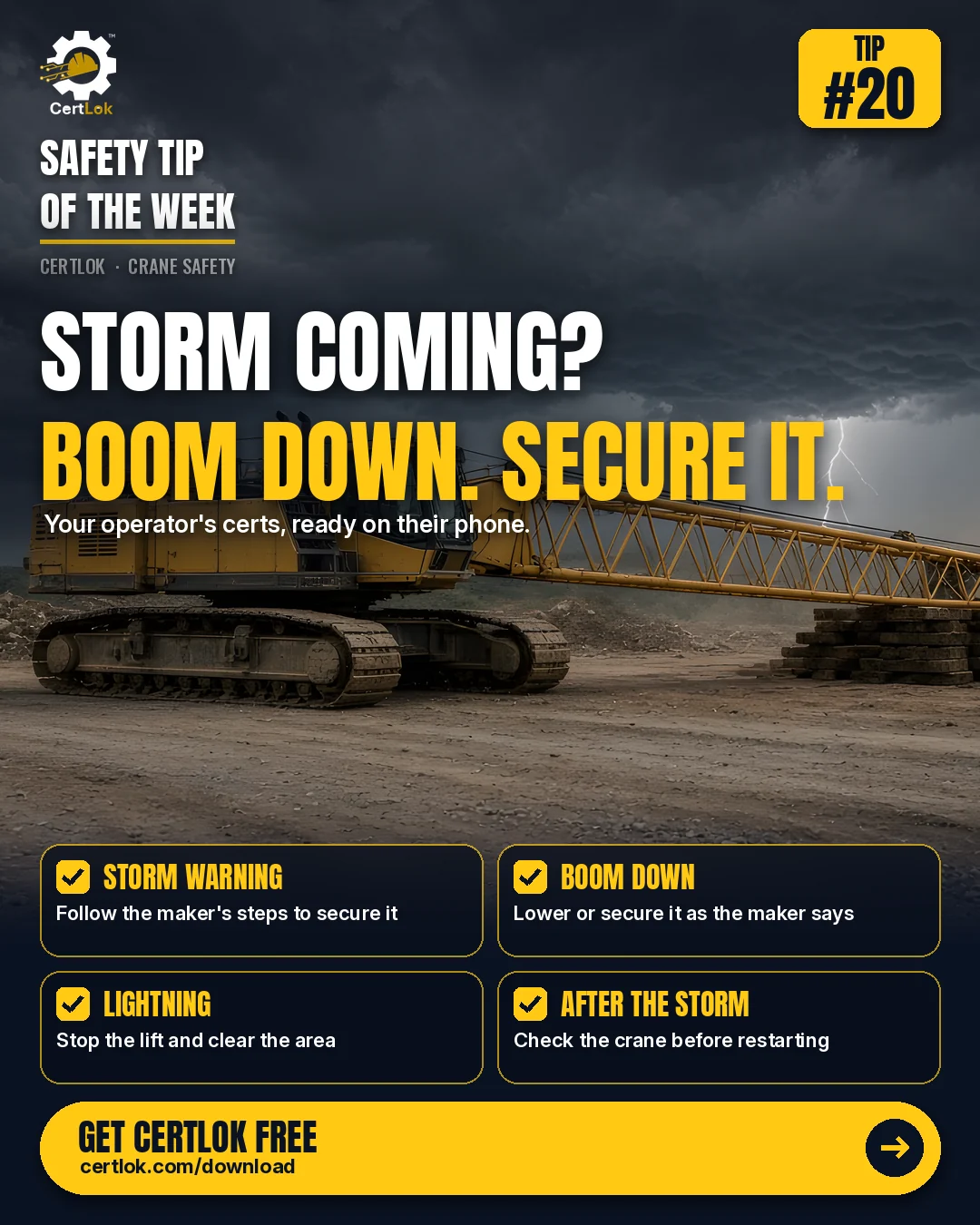
When the weather turns, you want qualified people making the call. With CertLok, their certifications are on their phone, ready to show in seconds. No digging through trucks. No texting photo copies.
Then the crew can focus on the sky.
According to the Occupational Safety and Health Administration (OSHA), when a local storm warning is issued, the competent person must decide whether to follow the crane maker's steps for securing the crane.
When a storm is coming:
Bottom line: no lift is worth riding out a storm.
Crane operators, linemen, riggers, groundmen, heavy equipment operators, and more all work under the same sky. So secure the crane when a storm comes, and keep your certifications current and in one place with CertLok.
Source: OSHA, 29 CFR 1926.1417(h), storm warning
Keep your safety certifications in one digital wallet on your phone, ready to share in seconds.
Download CertLok freeSign up for Insights