Credentials and Certifications
By Risk Data Analytics, Inc. Article 010
You have probably spent time in the seat next to someone who has run cranes for twenty years, watching how they read a load chart, set up on soft ground, and handle a pick near power lines. Getting from there to running a crane on your own is a set path. There is a federal rule, a certification exam with a written part and a hands-on part, and a check by your employer. Here is how those pieces fit together, using only what the official sources say.
On construction sites, the Occupational Safety and Health Administration (OSHA) sets the rule for crane operators in Title 29 of the Code of Federal Regulations (CFR), section 1926.1427. It says the employer must make sure each operator is trained, certified or licensed, and evaluated before running covered equipment [1]. Some equipment is left out of that section, such as derricks, sideboom cranes, and equipment rated to lift 2,000 pounds or less, though other training rules still apply to those [1].
The rule gives more than one route. If a state or local government licenses crane operators, the operator needs that license to work in that area [1]. Otherwise the operator must be certified, either by an accredited crane operator testing organization or through an audited employer program [1]. A certification from an accredited testing organization can move with you from one employer to another, while an audited employer program certification only counts while you work for the employer that issued it [1]. When certification or licensing is required, the employer must provide it at no cost to the employee [1].
The National Commission for the Certification of Crane Operators (NCCCO) is one of those testing organizations. Its certifications are known as NCCCO certifications [2].
Before you are certified, OSHA lets you run equipment only as an "operator-in-training" [1]. That means:
For the NCCCO Mobile Crane Operator certification, NCCCO lists these requirements [2]:
The mobile crane written exams have one Core exam that everyone takes, plus Specialty exams for each crane type [2]. The three Specialty designations are [2]:
You must register for the Core and at least one Specialty [2]. Operators certified on Telescopic Boom, Fixed Cab cranes also get the Service Truck Crane designation, because service truck cranes are a subcategory of fixed cab cranes [2].
The Core exam has 95 multiple-choice questions and you get 90 minutes [2]. Each Specialty exam has 26 multiple-choice questions and you get 60 minutes [2]. NCCCO offers three ways to take the written exams: Online Proctored Testing, Test Center Testing, and Event Online Testing [2].
The practical exam is six tasks that get harder as you go [3]:
Before the test there is a briefing, a walk-around of the crane, and a familiarization period, and you are told the crane's make and model, boom length, and test load weight [3]. You must watch the NCCCO candidate video within 24 hours before the practical exam [3]. Hand signals on the test follow the Standard Method [3]. An unsafe act, meaning something uncontrolled or reckless enough to put people or property at risk, ends your test [3]. You also need to wear the personal protective equipment (PPE) the test site requires, which at a minimum meets federal OSHA requirements [3].
You can take the written and practical exams in either order [2]. Once you pass your first exam, you have 12 months to pass the matching exam in the same designation [2]. Any exam passed outside that 12-month window does not count, and you would have to take it again [2]. When you pass the Core, at least one Specialty, and the matching practical, you are certified for five years [2]. Certified operators receive a laminated NCCCO wallet card [2].
Certification is not the last step. OSHA says the employer must evaluate each operator on the equipment they will actually run, including its safety devices, operational aids, software, size, and setup, and on the lifts the job calls for, such as blind lifts or multi-crane lifts [1]. The rule states plainly that holding a certificate cannot, by itself, make someone qualified for this purpose [1]. The employer must write down the evaluation with your name, the evaluator's name and signature, the date, and the make, model, and configuration of the equipment, and keep it available at the worksite [1].
An NCCCO certification shows that you passed written and practical tests run by an accredited testing organization. OSHA requires those tests to cover set knowledge and skills and to certify by equipment type, or type and capacity [1]. It is portable between employers who use this route [1]. It does not replace the employer's own evaluation on the specific crane and work [1].
Most crane operators carry more than one certification, and the expiration dates matter. CertLok is a free credential wallet app for crane operators, linemen, riggers, and other construction trades. Your NCCCO certification, Commercial Driver's License (CDL), and other certifications live on one phone, and you can share them from the gate instead of digging through a truck for paper copies. We verify credentials like your CCO card and CDL.
CertLok also keeps your Work History: the cranes you have run, the jobs you have worked, and who you worked for. When it is time to recertify or apply for a new job, that record is already on your phone, and the free app can turn it into a clean, professional résumé.
Download CertLok free from the Apple App Store or Google Play. Learn more at https://www.certlok.com, and find answers at https://www.certlok.com/faq.
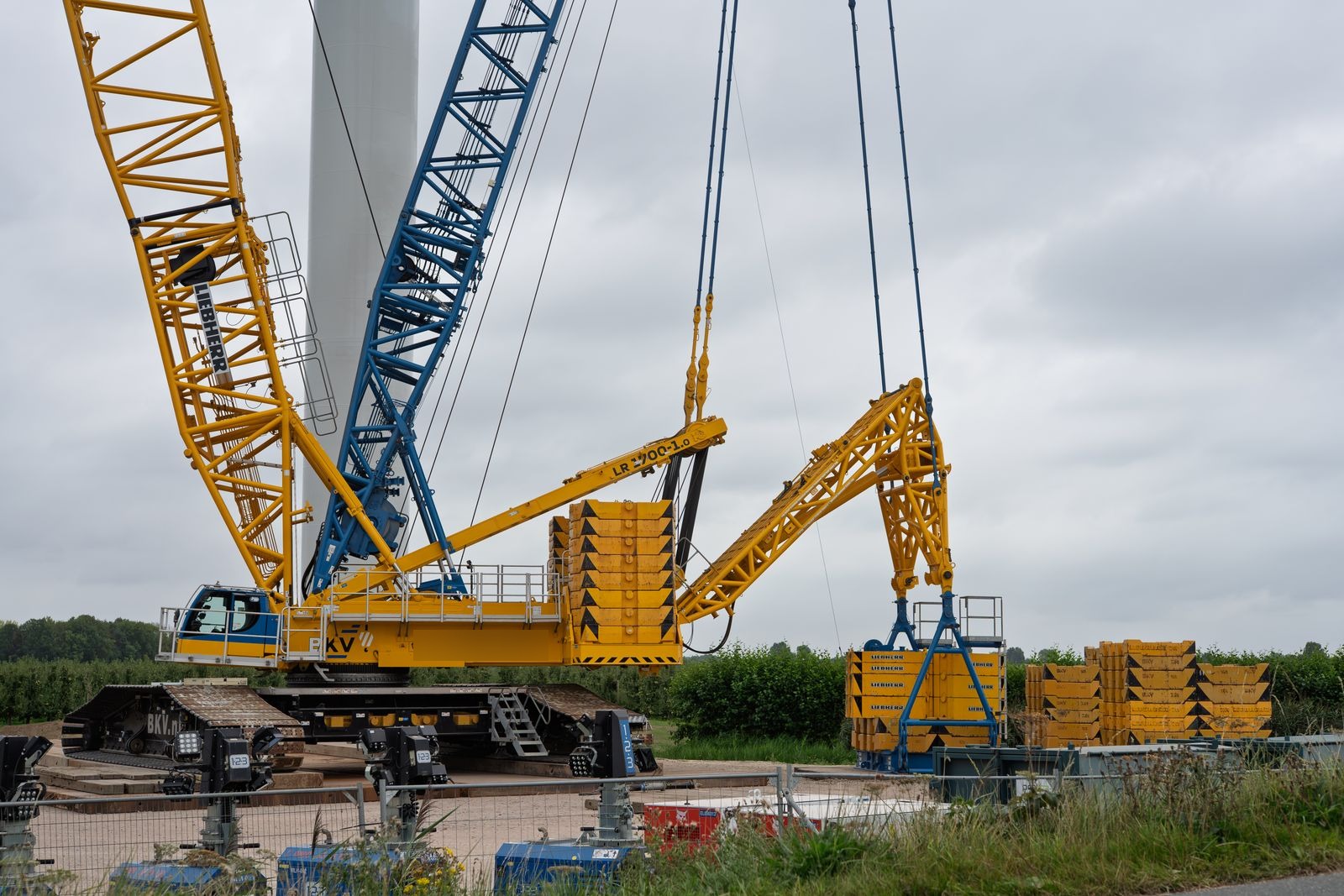
Photo: Martijn Stoof on Pexels